One label for every mine
Newmont's sites around the world each labeled parts their own way. I designed a single barcode label system that holds up in harsh conditions and scans fast, wherever it's printed.

Every site had its own label
I owned the label system end to end, running design workshops and stakeholder sessions to agree on what every label had to do. Three problems kept coming up.
Inconsistent systems
Facilities used different barcode labels, which made inventory and asset tracking slow and error-prone.
Harsh conditions
Labels had to survive extreme weather, chemicals and rough handling without fading or peeling.
People on the clock
Crews needed something they could read and scan in seconds, not a label they had to study.
What the label had to be
Research and feedback sessions with stakeholders boiled the brief down to three needs.
- One system everywhere. A single, consistent label so inventory works the same at every facility.
- Built to last. Materials that hold up to heat, chemicals and abrasion.
- Fast to read and scan. Clear hierarchy and a reliable code, so scans work the first time.
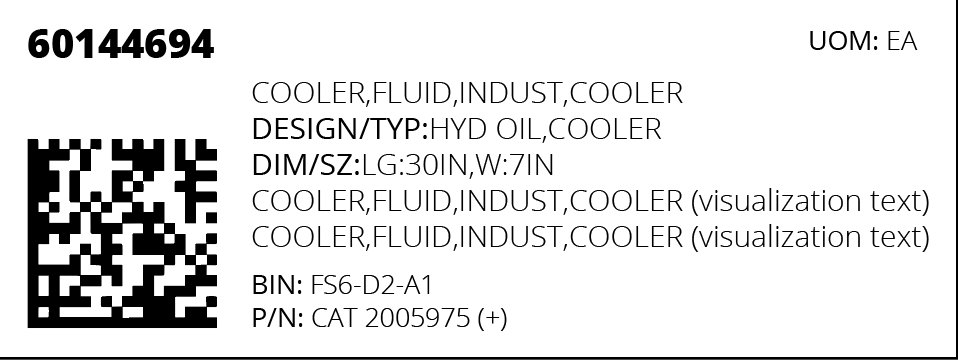
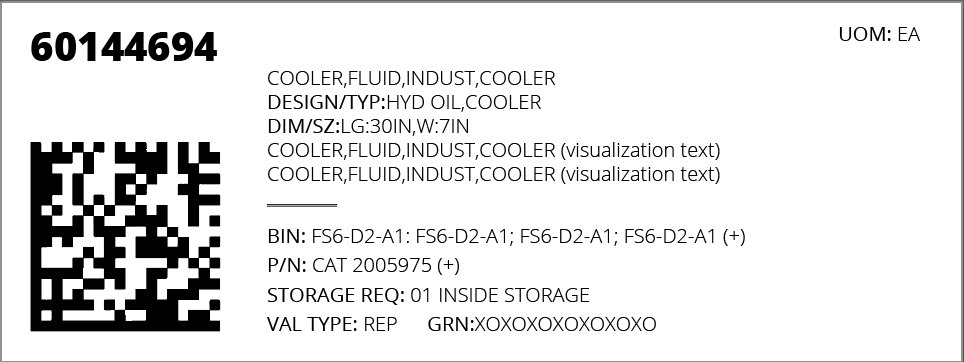
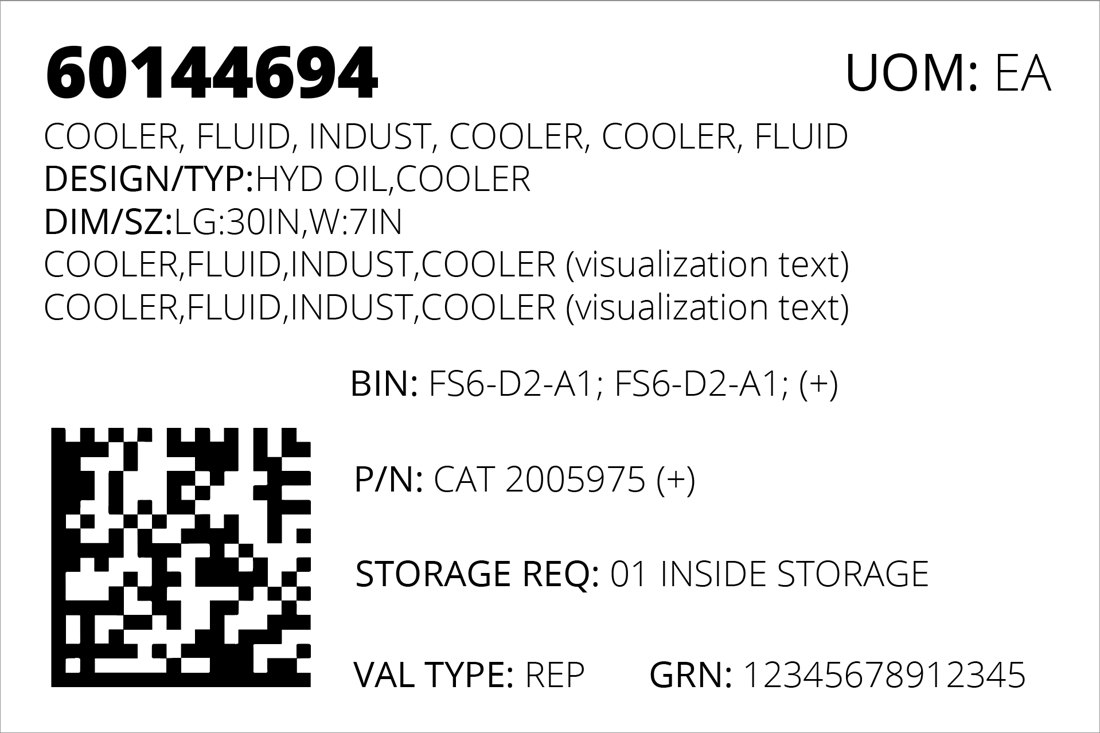
Two labels, one layout
Every label follows the same order: who it is, what it is, where it goes. Stock and direct-charge parts carry different details, so each got its own field set inside the same frame.
Stock parts
For items going onto a shelf: material number, full description, bin, part number, storage needs and goods receipt.
Direct-charge parts
For items going straight to a job: purchase order line, who it's for, where it's unloaded, and the work order and cost center to charge.
Shown to scale against each other. Sample data. Every size uses Open Sans with a 1/8 in margin, and allows 40 characters per line.
- 1Unique ID firstOpen Sans ExtraBold, the biggest thing on the label, so the right part is found by eye.
- 2Unit of measurePinned top right, the same place on every size.
- 3DescriptionUp to 40 characters per line, with room for one more line.
- 4Data Matrix code15–20mm depending on size. Small, error-correcting, and still scans when scuffed.
- 5FieldsLabel in semibold, value in regular. Bottom-aligned so the code and text read as one block.